
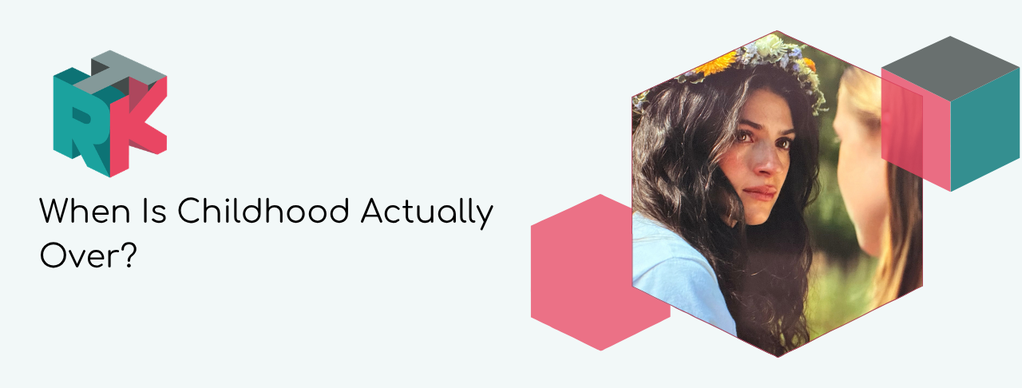
There’s no single moment when childhood ends. It happens quietly — in the first problem they solve without us, the first secret they keep for themselves, the first time they need our presence more tha
When Does Childhood End?
Prime’s new coming-of-age drama Sterling Point follows a teenager reshaped by one unexpected summer — and it’s a good reminder that “growing up” rarely announces itself.
It happens in smaller, quieter moments than TV ever lets on.
It’s a question every parent asks at some point — usually triggered by something small. A door slammed a bit too hard. An “I’ve got this, Mum” that didn’t used to be there. A bedroom that suddenly needs a lock.
Here’s the truth: there’s no single day childhood ends. It’s not a switch — it’s a series of quiet handovers.
The Moments That Actually Mark It
- The first time they solve a problem before telling you about it, not after.
- When “why” questions turn into “what if” questions — curiosity becoming identity.
- The first secret kept not from mischief, but from a genuine need for privacy.
- When they comfort you instead of the other way round.
- The day they choose a friend’s opinion over yours — and you realise that’s meant to happen.
Developmentally, we talk about adolescence stretching well into early adulthood. The prefrontal cortex — the part of the brain involved in planning, decision-making and impulse control — continues developing into the twenties.
So “childhood ending” was never really about a birthday.
It’s about capacity: the growing ability to hold complexity, sit with discomfort and make sense of the world without a parent translating it first.
What This Means for Us as Parents
Childhood doesn’t end when they stop needing us.
It ends gradually, as the kind of needing changes — from needing us to do things for them, to needing us to simply be there while they do it themselves.
That shift is uncomfortable. It’s supposed to be.
Resilience isn’t built in the absence of a parent — it’s built in the presence of one who’s learning to step back at the right pace.
So if you’re grieving a version of your child that’s slipping away, that’s love adjusting to a new shape.
And if you’re watching them stumble through something hard without rushing to fix it?
That’s not letting go.
That’s one of the most resilient things a parent can do.

No comments yet. Login to start a new discussion Start a new discussion